
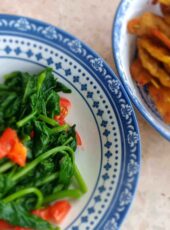
Fresh, savory, and ready in minutes, this ensaladang alugbati is one of those simple Filipino side dishes that earns a permanent spot on your table. Made with alugbati (Malabar spinach), ripe tomatoes, spring onions, and a splash of fish sauce, this Filipino spinach salad is bright, clean, and pairs beautifully with almost any Filipino meal.
This is my mum’s version, and like most of her cooking, it never came from a written recipe. She always made it with bagoong the fermented shrimp paste that’s a staple in Filipino kitchens but since bagoong can be hard to find outside the Philippines, fish sauce does the job beautifully. Soy sauce works too if you’d prefer to keep it vegan. The spirit of the dish stays exactly the same.
What makes this version special is that there’s no citrus, no fuss. Just fresh ingredients working together the way they’re meant to. The natural sweetness and tartness of ripe tomatoes does all the work, balancing the savory dressing perfectly. Sometimes the simplest way really is the best way and my mum knew that better than anyone.
What Is Alugbati?
Alugbati (Basella alba), also known as Malabar spinach or Filipino spinach, is a leafy green vine widely used in Filipino cooking. Unlike regular spinach, alugbati has thick, slightly succulent leaves with a mild, earthy flavor. A brief blanch just enough to lightly wilt the leaves will keep them vibrant, tender, and fresh-tasting without overcooking them.
It is rich in vitamins A and C, calcium, and iron, making it one of the most nutritious backyard vegetables in the Philippines.
Why You’ll Love This Recipe
Quick blanch, no fuss — just enough to lightly wilt the leaves
No citrus needed – ripe tomatoes provide all the tartness and balance naturally
Ready in under 10 minutes
Naturally vegan (use salt or soy sauce instead of fish sauce)
Pairs with everything — fried fish, grilled meat, or even just rice
Budget-friendly ingredients you likely already have
Ingredients to make Ensaladang Alugbati
Serves 1–2 as a side dish
For the salad:
2 cups fresh alugbati leaves, washed and drained
1 medium ripe tomato, sliced
2 stalks spring onions, choppd
For the dressing:
1–2 teaspoons bagoong, fish sauce, or soy sauce (start with one teaspoon and adjust to taste, saltiness can vary depending on the brand and the ripeness of your tomatoes)Optional topping:1 salted egg (itlog na maalat), sliced
Instructions
- Blanch the alugbati. Bring a pot of water to a full rolling boil. Drop in the alugbati leaves and blanch until just lightly wilted; 5 to 10 seconds for young, tender leaves, or 10 to 15 seconds for more mature leaves. You are not fully cooking them, just wilting them slightly.
- Ice bath. Immediately transfer the blanched leaves into a bowl of cold water. This stops the cooking instantly and keeps the color bright and vibrant.
- Squeeze out the water. Lift the alugbati from the cold water and gently squeeze out as much excess water as you can. You don’t want a watery salad.
- Slice the vegetables. Cut the tomato into wedges or rounds. Slice the spring onions.
- Combine. In a large bowl, add the alugbati, tomato, and spring onions.
- Dress it. Drizzle the dressing over the salad. Toss gently until everything is lightly coated.
- Taste and adjust. Add a little more dressing or a pinch of salt to your liking.
- Serve immediately at room temperature or slightly chilled.
Tips for the Best Ensaladang Alugbati
- Use ripe tomatoes. A ripe, juicy tomato brings natural sweetness and tartness that perfectly balances the dressing. No citrus needed.
- Know your leaves. Young, tender alugbati leaves need only 5 to 10 seconds of blanching. More mature, thicker leaves benefit from 10 to 15 seconds. When in doubt, pull them out early. You can always blanch a little longer, but you cannot undo overcooked greens.
- The cold water step is non-negotiable. It stops the cooking instantly and keeps your alugbati looking gorgeous and green.
- Squeeze well. Excess water will dilute the dressing and make the salad soggy. A good squeeze makes a big difference.
- Use both parts of the spring onion — the white and green parts. Nothing goes to waste.
- Don’t overdress. The natural flavor of alugbati is delicate. A light hand with the dressing lets everything shine.
- Serve fresh. This salad is best eaten right away.VariationsAdd a salted egg for a richer, more savory version.
Variations
- Add salted egg for a richer and more savoury version.
- Use fermented bagoong if available for an Ilocano experience and the funky, fermented bagoong works beautifully with the fresh greens.
- Mix in grilled aubergine for something heartier.
- Make it vegan by replacing the fish sauce with soy sauce or salt.
If you are not a fan of malabar spinach, try:
- bok choy
- bitter gourd leaves
- sweet potato leaves
- other leafy greens
Here are some classic pairings with alugbati salad:
- Sinangag (Garlic Fried Rice) or plain steamed rice
- Fried or grilled fish, meat, tofu or tempeh
Storage
This salad is best eaten immediately after tossing. If you need to prepare ahead, keep the blanced alugbati, tomatoes and spring onion separate in the fridge and toss together just before serving.
Frequently Asked Questions
Why no citrus or acid added to the dressing?
Ripe tomatoes naturally provides the sweetness and tartness to this salad. This is the traditional way my mum used to make it and honestly it does not need anything more.
How long should I blanch the alugbati for?
It depends on the leaves. Young tender leaves only needs 5 to 10 seconds in the boiling water to lightly wilt while more mature, thicker leaves would benefit from 10 to 15 seconds blanching. The goal is a light wilt, not fully cooked just sliightly wilted.
Can I blanch the alugbati ahead of time?
Yes! Blanch, cool and squeeze the malabar spinach in advance, then store it in the fridge. Just toss with the other ingredients when ready to serve.
Is ensaladang alugbati healthy?
Alugbati is is rich in Vitamins A, B, and C, iron, calcium and dietary fibre. Research on Basella Alba leaves confirms it is a good source of fibre, vitamins, iron and calcium with phytochemicals like saponins that may help protect against cancer and cardiovascular disease. The National Nutrition Council of the Philippines notes that regular consumption of malabar spinach or alugbati may help prevent bone weakness, anemia and cardiovascular disease. , alugbati is rich in vitamins A and C, iron, calcium, and dietary fibre, all in a simple low calorie diet.
Ensaladang alugbati is proof that the best Filipino dishes are often the simplest. A handful of fresh ingredients, a quick blanch, and a little bagoong or fish sauce and you have something that tastes like home. This Filipino spinach salad is my mum’s recipe, and like all the best family dishes, it needs nothing extra. The simplicity speaks for itself.
Looking for inspiration for your next meal or want to try more homecooked meals?
Browse more recipes here or head to Facebook, Pinterest and Instagram for updates on life in the countryside and beyond.
Let’s get cooking.

Ensaladang Alugbati (Malabar Spinach Salad)

Equipment
- 1 medium cooking pot
- 2 bowls
- 1 chopping board
- 1 tongs pair
Ingredients
- 2 c fresh alugbati leaves washed and drained
- 1 medium ripe tomato sliced
- 2 stalks spring onions chopped
- 1 tbsp fish sauce or salt to taste
Instructions
- Bring a pot of water to a boil.
- Blanch alugbati for 5–10 seconds (young leaves) or 10–15 seconds (mature leaves) until lightly wilted..
- Transfer immediately to cold water to stop the cooking.
- Squeeze out excess water gently with your hands.
- Combine alugbati, tomato, and spring onions in a bowl.
- Drizzle with fish sauce and toss gently.
- Taste and adjust seasoning. Serve immediately.


 English